Beyond SEO: what the new search acronyms mean for your business
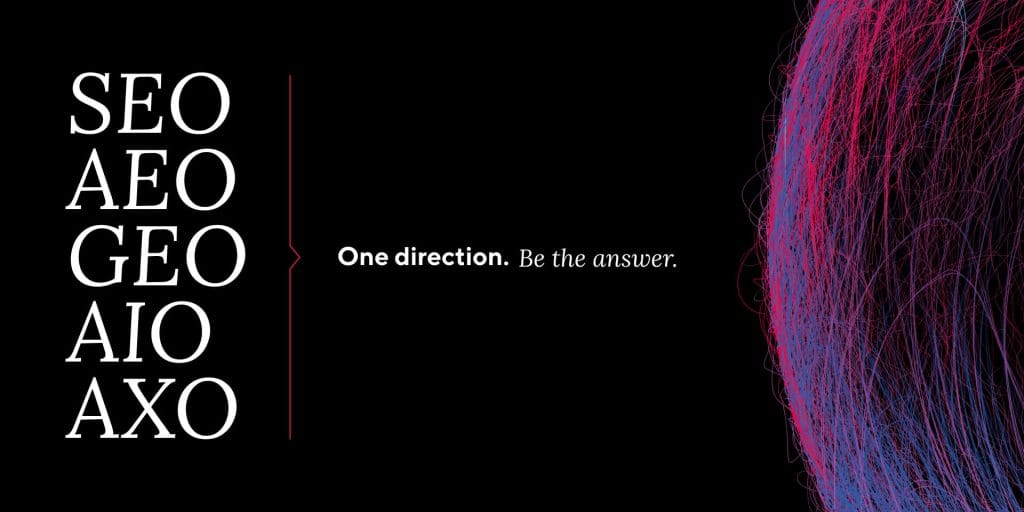
SEO, AEO, GEO, AIO, AXO. A short guide to search acronyms and what they mean for your business.
The whole focus on Search Engine Optimisation (SEO) has shifted. Now there are more acronyms vying for recognition: AEO, GEO, AIO and AXO. A lot of this feels like jargon masquerading as strategy, but at its core lies an actual paradigmatic shift in the way people look for information and companies that do not recognise this paradigm will slowly but surely fall behind.
People are increasingly turning to AI tools like ChatGPT, Perplexity and Gemini to research products and suppliers before they ever run a Google search. On Google itself, AI-generated answers now sit above the results for millions of queries, meaning users get what they need without clicking through to any website.
For B2B businesses this is particularly problematic, as decision makers have begun using AI tools for initial research, which leads to a pre-defined list of competitors and suppliers prior to even landing on your website.
Below are definitions of each of the latest acronyms and why they are important.
Search acronyms explained
The terms SEO, AEO, GEO, AIO, AXO seem to compete in complexity, but they share one goal: making sure your business gets found by the systems people now search with.
SEO (Search Engine Optimisation) is still the basis for all other search strategies. As long as your site is properly indexed and ranked with Google and/or Bing, everything else follows.
AEO (Answer Engine Optimisation) refers to the process of structuring your content so that it can be used in answers or references within AI-powered search results. This is typically done through providing direct answers to very specific user queries.
GEO (Generative Engine Optimisation) is about making your brand and content more likely to be understood, trusted and cited by generative AI systems. It focuses on whether AI tools can confidently use your content as a source when forming an answer. This means clear structure, credible expertise, consistent brand information and authority signals beyond your own website.
AIO (Artificial Intelligence Optimisation) is the broad umbrella. In this context, it refers to the work involved in making your content readable, trustworthy and referenceable by AI systems – from technical structure and schema to clarity, authority and source credibility. It is the foundation the other disciplines sit on.
AXO (Answer Experience Optimisation) is the newest and least settled of the five. We use it to describe how useful, complete and satisfying your content feels when it appears inside a conversational, voice-led or AI-generated search experience. In other words, it is not just whether your content appears, but whether the answer it helps produce actually satisfies the user.
Why this matters now
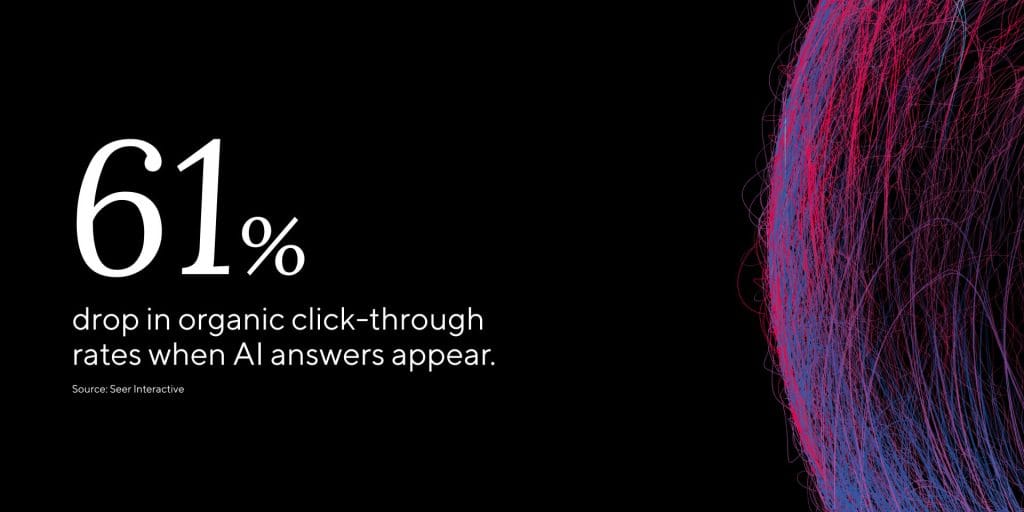
Google’s traditional search is losing clicks to AI overviews with organic click-through rates down 61%. This means that even if you rank well, your organic traffic may drop significantly because the answers now appear above your listing and there is much less need for users to scroll down.
Ahrefs analysed the conversion rates of visitors coming from searches powered by artificial intelligence and determined that they were converting at 23 times higher rates than those visiting websites through organic means. These visitors also tend to visit later in the decision process, as they have likely already done their research via the chat prior to searching for the product/service, bringing them further along in the purchasing cycle.
AI’s visibility as an “answer” is ultimately based on outside-in credibility. Muck Rack’s ongoing research into more than one million AI citations finds that the majority of sources cited by AI come from earned media, not brand-owned websites, with journalism alone accounting for around 25% of all citations.
A well-polished home page does not guarantee a presence within this new paradigm.
Ahrefs tells us that fewer AI Overview citations now come from pages already ranking in Google’s top 10. That figure has fallen from 76% to 38% in less than a year. In other words, ranking on page one still matters, but it is no longer a guaranteed route into the answer itself.
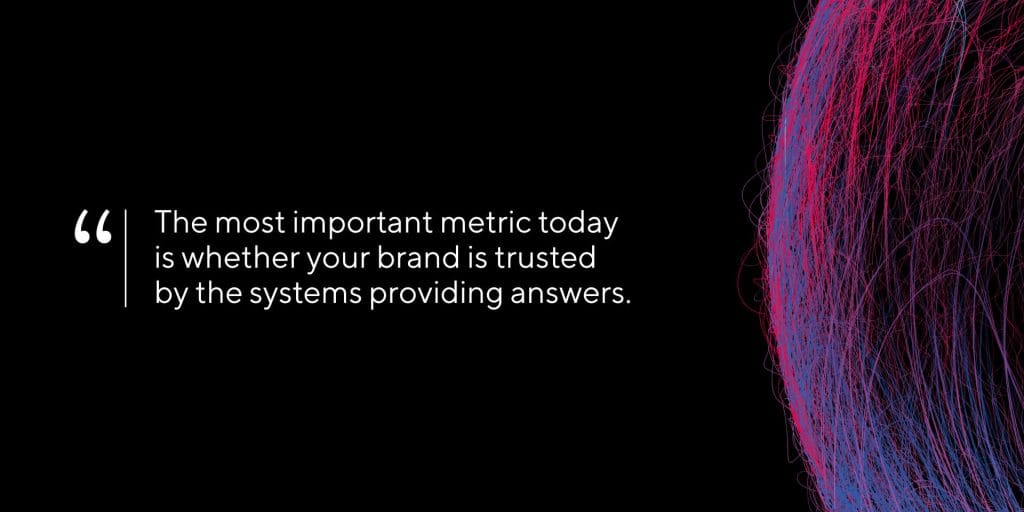
Collectively, these shifts clearly indicate that while traffic and rankings continue to be important metrics, they are no longer the complete picture. Ultimately, the most important metric today is whether or not your brand is perceived as credible and trusted by the systems providing answers.
What to do about it
You might want to chase each new acronym. A better approach is to develop the core capabilities that support all of them.
- Ensure you have a solid SEO foundation, as these newer disciplines are built on traditional search. Focus on this first, then layer the other areas on top.
- Organise your content so it provides accurate answers to real questions and helps answer engines pull from your website. This requires clear headings, straightforward answers and structured information that helps machines understand what each page is about.
- Develop authority outside your website through earned media coverage, references and credible third-party content, as these are often the sources generative tools rely on.
- Write in a consistent, organised way that both humans and machines can understand. This is increasingly important for conversational and voice-led searches.
- Measure correctly, as many analytics programs still group AI traffic poorly.
- Set up tracking for AI referral sources in Google Analytics 4 (GA4) to identify what is driving conversions.
There is nothing radically new here. These actions still come back to quality content, proper structure and building authority through credible channels.
Where Vivid fits
- We bring together brand strategy, content and technical SEO. The best results come when brand strategy, useful content and strong technical delivery work together.
- We create content that properly answers user questions and structures this in a way that allows search engine crawlers and AI tools to find, understand and use the information.
- We develop the technical backbone of websites so they are easier for search engines and AI systems to read.
- We help brands build credibility and authority so they are mentioned, cited and trusted, not just ranked. We are invested in understanding the transition from SEO to AEO and GEO, and we will continue applying these insights across our client work.
New systems will continue to appear. Some may remain relevant, while others will become obsolete. What matters most is the need to prepare for the changes that follow.
If you are maintaining your website rankings but experiencing a decline in lead volume, there is a gap worth discussing, and we are here for it. Get in touch to discuss an AI search visibility audit: we’ll check whether your brand appears in ChatGPT, Perplexity, Gemini and Google AI Overviews for your priority buying queries.
Get in touch
Ready to make your brand burn brighter internationally? Let’s talk.