The under-16s social media ban: what it means for brands, reach and the rise of AI
The UK has formally banned under-16s from social media.
For marketers this is less about whether minors should have access to social media. It is about how reach, audience and content strategy will be affected when millions of users go offline.
Following Australia’s lead where a similar ban was implemented in December of last year, the government announced on 15 June that it would implement a blanket social media ban on users under 16. The new law is expected to pass before Christmas with the ban taking effect in early 2027. Enforcement falls directly to the social media companies rather than to parents or minors.
TikTok, Instagram, Snapchat, YouTube, Facebook and X have all been specifically named as subject to this enforcement. Messaging services such as WhatsApp and Signal are currently exempt.
There is certainly merit to the argument that no minor should be using these sites, and many parents may very well welcome this decision. Regardless of how you feel about the policy, there will be a major commercial impact. Millions of users who represent a highly engaged audience are likely to disappear from the platforms that most businesses rely on for reach. This is something that merits serious consideration.
How large is the affected audience
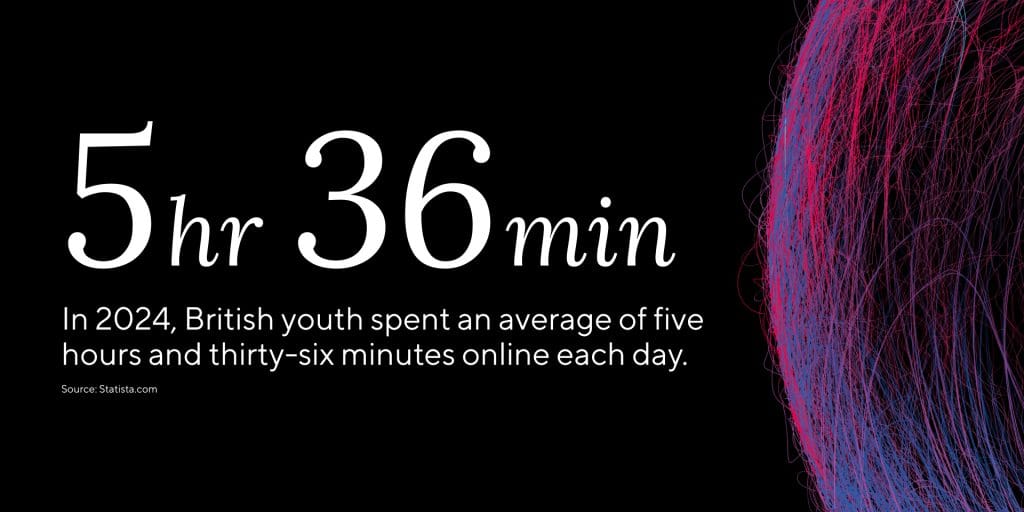
UK social media users aged sixteen and under number approximately 8.5 million. Assuming roughly a quarter find ways around age restrictions using a VPN, borrowed accounts or a false date of birth, around 6.4 million users would be lost from mainstream UK platforms. Although 6.4 million may appear to be the whole story, the reality is that teens represent a disproportionately larger portion of total usage than their numbers suggest. Teens use their phones and devices at a much greater rate than adults. In 2024, British youth spent an average of five hours and thirty-six minutes online each day. A large percentage of that was social media. Removing teen users does not just shrink the overall user base; it removes the most active hours on the platform.
The exposure is uneven
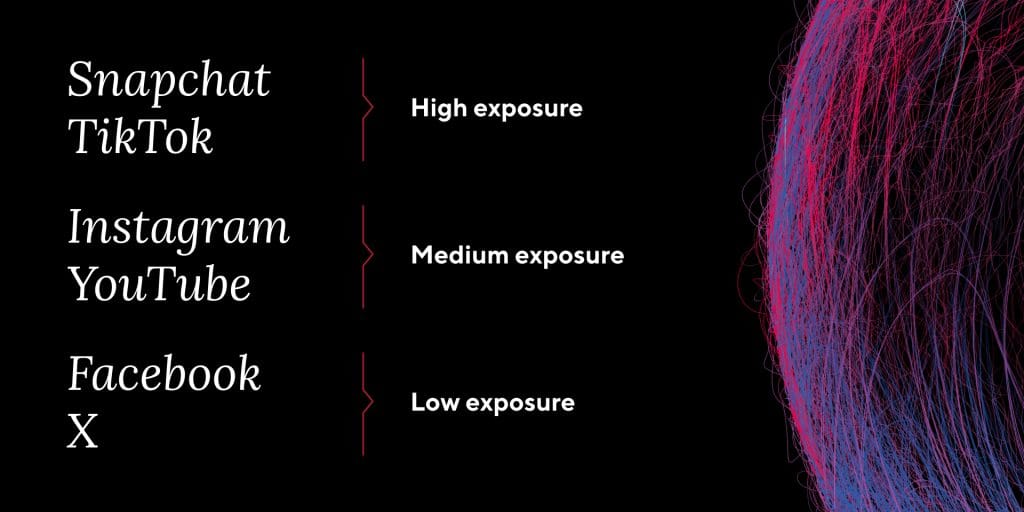
Snapchat and TikTok have extremely high proportions of younger users and are projected to experience the largest losses. Estimated traffic declines are approximately twenty to thirty percent for Snapchat and fifteen to twenty-two percent for TikTok. Instagram and YouTube will see significantly less decline. For Facebook and X the impact is nearly non-existent.
How this affects revenue
Traffic loss and revenue loss are not the same thing. Advertisers pay less to reach children than adults because children have less purchasing power, so a 20% loss of traffic might translate into only a 10 to 15% loss of ad revenue.
Even so, the total loss will be substantial. An estimated range for the total UK yearly loss to the platforms is somewhere between £450 million and £1.1 billion. On top of that, a portion of the influencer economy (estimated at between £150 million and £350 million) could lose some of its revenue.
This is a small percentage of the total global revenues for Facebook, Instagram and the other platforms. For Meta, it would likely be less than one percent of worldwide income. For Snapchat, which attracts a larger share of younger users than its competitors, the loss would be significantly greater. Gaming and teen-lifestyle influencers may lose the largest percentages of their revenue. Finance, business and parenting influencers may experience little to no impact.
Where AI changes the picture
Most coverage misses where the ban meets a second, larger shift in how we find information. The two trends are connected.
First, the ban itself reaches into AI. Alongside the social media restrictions, the UK government indicated that chatbots with companionship or romance features will need to enforce a minimum age of 18. Concern over minors forming one-to-one relationships with AI systems not built with child safety in mind has put the chatbot issue squarely on the regulatory agenda.
Second, and more important for most organisations, attention is already moving away from the social feed and toward AI-based search. As the audience that remains turns to tools like ChatGPT, Perplexity and Gemini to research and decide, any strategy that relies solely on organic social reach is vulnerable on both fronts.
The brands that handle this well will treat the ban as a trigger to broaden how they are discovered: stronger owned channels, content built so AI systems can cite it, and a presence that is not dependent on any single platform’s algorithm.
What to learn from this
Three things are worth holding onto.
The reach you have today is not guaranteed tomorrow, and any strategy built around a single channel carries real risk.
The audience that remains is moving toward AI-led discovery, where authority, structure and trust matter more than follower counts.
The right response is not panic but diversification, making sure your brand is visible across owned, earned and AI channels.
The under-16s ban is a clear indication of where things are headed. Platforms change, rules change and audiences move. If giving children their childhood back is the right decision, then either way the brands that stay visible will be the ones prepared to adapt rather than assume the ground will always hold.
If you are thinking about what changing reach means for your brand, then it is time to talk.
Get in touch
Ready to make your brand burn brighter internationally? Let’s talk.
View All Blog Posts →