Why a LinkedIn newsletter should be your next marketing move
Standard LinkedIn posts are here today, gone tomorrow.
Posts on LinkedIn are short-lived. The algorithm filters them and for most accounts, only a fraction of people who follow you will see a post in their feed.
A LinkedIn newsletter works differently than standard posts. When you publish a new edition, it is delivered directly to subscribers through email, in-app notification and push alert. Subscribers receive the newsletter directly, so it doesn’t rely on someone scrolling their feed and happening to see it. Every single one of those articles lives at a permanent, publicly accessible URL that can continue to bring readers in long after the article was first published.
If you are a business looking to build authority, stay top of mind and generate qualified leads, here is what you need to know about how to do it.
The problem with standard LinkedIn posts
Reach on LinkedIn has been declining over the past few years. Research done by analysts who study the LinkedIn algorithm shows that the reach of standard posts has decreased significantly across the platform.
Businesses that are thriving on LinkedIn are not just posting more often. They are distributing smarter. A newsletter is a smart way to reduce dependency on feed ranking because it sends your content directly to your subscribers via email, in-app notifications and push notifications to their mobile devices.
That is a structural advantage that is built into the platform.
The window is still open
As of today, LinkedIn has over 1 billion registered members and tens of thousands of active newsletters.
This represents far less competition than you will find in email marketing. Some organisations that effectively manage their newsletters report open rates in the 40%+ range, outperforming typical email marketing benchmarks. Engagement rates on LinkedIn content have been increasing, with Socialinsider, a third-party benchmark provider, reporting engagement rates peaked at 5.76% in March 2025 before easing to 5.20% by mid-2025.
In addition to reach, there is also the potential for influence among the majority of business-to-business (B2B) markets. Most industries do not have an established newsletter voice on LinkedIn. Therefore, this presents a legitimate opportunity for B2B businesses to create a continuous stream of relevant and purposeful newsletters.
It’s a direct line to the people who matter
LinkedIn newsletters represent a means to directly communicate with the individuals who make purchasing decisions within B2B markets.
Edelman and LinkedIn’s 2024 Thought Leadership Study states that:
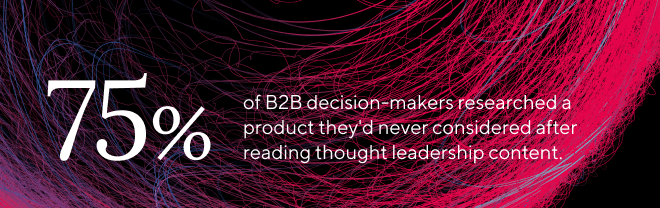
- 75% of B2B decision-makers state that effective thought leadership drove them to research a product or service that they were not familiar with prior to doing so.
- 52% of decision-makers and 54% of C-suite executives spend an hour or more each week reading thought leadership content, using it to evaluate potential partners and suppliers.
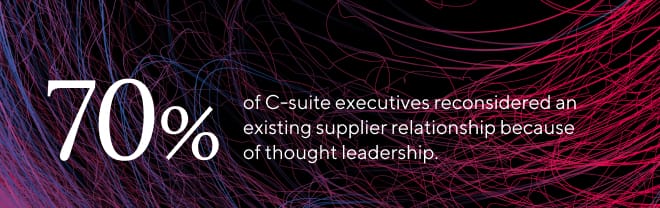
- 70% of C-suite executives stated that thought leadership content at least occasionally caused them to reconsider their relationship with their existing suppliers.
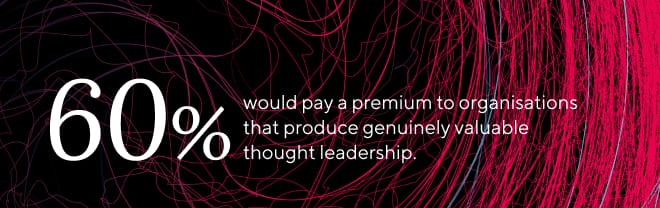
- 60% indicated they would be willing to pay a premium to organisations that create genuinely valuable thought leadership.
With a well-planned newsletter strategy, you will establish yourself as the authoritative voice in your market before you even engage in a sales conversation. Unlike a social media post, each newsletter creates its own permanent URL which can drive traffic to your content long after the initial publication date.
Characteristics of an effective LinkedIn newsletter
There are a few characteristics that define successful LinkedIn newsletters.
First, they provide immediate value. There should not be a welcome paragraph or any other type of introductory material. The first few lines of each newsletter are viewable in the LinkedIn feed, therefore they need to entice the reader to click through.
Second, they provide sufficient evidence of your expertise. Articles should be organised with headings and short paragraphs to allow for easy reading on mobile devices.
Third, they strike the right balance. A useful rule of thumb is to include 70% educational value, 20% your personal perspective or experiences, and 10% promotional information. If the primary focus of a newsletter is self-promotional, it will lose subscribers. On the other hand, if a newsletter focuses on providing valuable insights, it will gain new subscribers.
They also post at regular times. Irregular posting trains the audience to disregard you.
Your first five things to do correctly
- Give it a name that makes sense. It needs to be specific enough to convey what area of your business you are writing about and be unique enough to become a recognisable name for your business.
- Get the first edition right. By default, LinkedIn invites your connections and followers to subscribe when the first edition is published, which is the largest built-in launch you can get, so make it a good one.
- Use links judiciously. Having a few quality links is better than having many links and hoping some readers click them. Be sure to include anchor text to guide the reader to what you want them to read.
- Build your own email list alongside LinkedIn. LinkedIn controls the subscriber relationship. Create gated resources and lead magnets to convert your LinkedIn subscribers into an email list you can control.
- Look at the numbers that really matter. Look at click-through rates, comments and the number of direct messages sent in response to your editions rather than just the number of people who opened them.
Things to avoid
- Treating it like a sales brochure. Each edition that focuses on your products or services is going to train your subscribers to delete it.
- Being inconsistent. An erratic schedule trains your subscribers not to look for your next edition.
- Writing for everybody. The best-converting editions are focused on a single audience and written specifically for that audience.
- Neglecting your opening lines. The first paragraph or two determines whether someone is going to read the entire newsletter.
What does it come down to?
LinkedIn newsletters provide businesses with a format to create content that gets delivered directly to their audience, provides opportunities for high levels of engagement, provides long-term visibility for your brand, and creates a direct line to professionals making purchasing decisions.
The platform is continuing to grow and the newsletter format is still largely underutilised. All that is needed is a consistent flow of audience-driven content and a plan behind it.
Businesses that are creating audiences today will be the ones those audiences will go to when they decide to purchase.
Key takeaways
- Newsletters reach subscribers via three delivery channels (email, in-app notification and push alert), reducing dependence on feed ranking.
- Some well-run LinkedIn newsletters report open rates in the 40%+ range, outperforming typical email marketing benchmarks.
- Each edition of a LinkedIn newsletter is publicly accessible and can be indexed by search engines. Therefore, they can live longer than a standard post.
- As of right now, there are over 1 billion people on LinkedIn and tens of thousands of active newsletters. With that many businesses creating content in so many different niche areas, there is still room to create your own unique voice.
- Publishing consistently matters more than publishing frequently. While some find success with weekly editions, a reliably scheduled cadence beats erratically scheduling your editions.
We’ve already done it
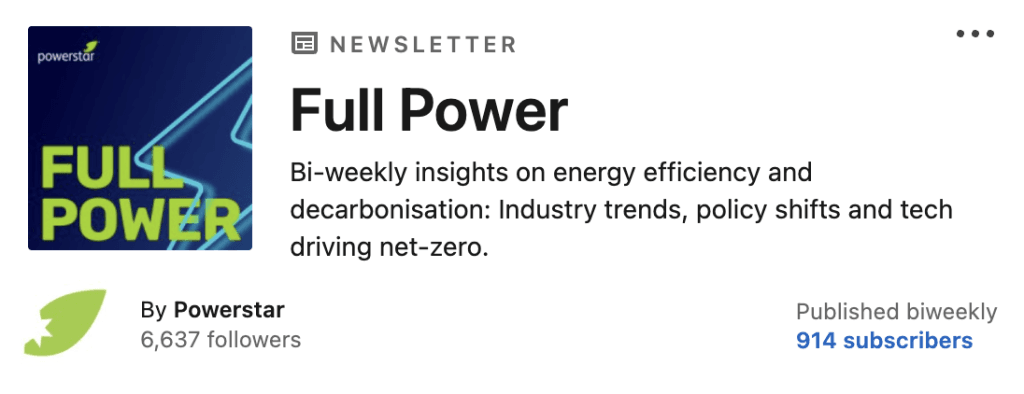
We collaborated to create Full Power, Powerstar’s LinkedIn newsletter on energy efficiency and voltage optimisation. We had 900+ subscribers in 6 days. We used our research on the target audience, we developed a clear content strategy, and we developed a creative identity that was targeted to the correct audience.
Read and subscribe to Full Power here.
If you would like to develop a newsletter that will work for your business, we’d love to have a chat to see how we can help.
Get in touch
Ready to make your brand burn brighter internationally? Let’s talk.
View All Blog Posts →